WELCOME !


WELCOME! CrossCurrents aims to provoke thought and enrich faith by interpreting current events in the light of Catholic tradition. I hope you find these columns both entertaining and clarifying. Your feedback and comments are welcome! See more about me and my work at http://home.comcast.net/~bfmswain/onlinestorage/index.html or contact me directly at bfswain@juno.com NOTE: TO READ OR WRITE COMMENTS, CLICK ON THE TITLE OF A POST.

Wednesday, September 18, 2013

#401: Is the Just War Theory Winning?

The recent crisis over chemical weapons in Syria illustrates the growing relevance of Catholic Social Teaching on war.


 I first learned about the “Just War Theory” during my sophomore year in college.  As an 18 year old male with a draft card in my wallet and a war raging in Vietnam, I had a personal stake in knowing what the Church taught about war, military service, and conscientious objection.

In the 45 years since, I have written and lectured about the Just War Theory (JWT) countless times.  Often I have found that my Catholic audience was not well enough informed about JWT to make it a practical tool for citizens to form their moral judgments about any specific war policy.

Moreover I have had to point out that, while JWT’s purpose is to impose moral limits on war, it has never actually prevented one.  But we may be getting closer to the day when it will—and the Syria crisis illustrates how.

First, some preliminary remarks about the theory itself:

Developed over 15 centuries beginning with Saint Augustine, JWT evolved as an alternative moral framework to both Christian pacifism (espoused by Jesus and the earliest Christians, and still embraced by millions of Christians today) and the anything-goes “Holy War/Crusades” approach (which the Church now rejects). JWT represents a kind of middle ground between a prohibition of all wars and a “carte blanche” for any war.

This theory presumes that peace is always our moral imperative, and that going to war must always be justified as an exception to the rule. The burden of proof is on those who argue for war, since the moral presumption is ALWAYS in favor of peace.

The theory aims not simply to determine whether a war is “justified,” but whether it is morally lawful—after all, the Latin word “JUS,” from which we get “justice,” means “LAW.”

To justify a war as morally lawful, any military action must meet two different sets of conditions: jus ad bellum  (conditions to justify going to war), and jus in bello  (conditions to justify the conduct of that war). To claim that one is engaged in a “just war” one must argue that all of the conditions in both sets are being met at every stage of the war.

Some scholars argue that the conditions set by JWT should not be applied as a simple “checklist,” but increasingly public figures are doing just that, and to good effect.  In the Syria crisis, leaders from Barack Obama to the U.S. Congress to the UN to Vladimir Putin have all cited elements of JWT to support their positions.  The overall result has been to force a sharper debate with clearer objectives and finally a more restrained approach that has made war less likely.

A brief check of some major portions of JWT illustrates this.

Just Cause?  Self-defense is the only just cause for war that is formally recognized in modern international law.  This does not apply to a U.S. intervention in Syria.

But recent conflicts have also raised the possibility of a new just cause—“humanitarian intervention”­­—where events harming innocent people within a sovereign state justify foreign intervention. 

In his 2008 address to the U.N. General Assembly, Pope Benedict XVI endorsed the notion of a “responsibility to protect” innocent populations from harm.  This is not yet an established norm in the Church’s JWT, nor in international law, but we may be witnessing the JWT’s evolution to include this as a just cause.  If that happens, the Syria crisis will have contributed to that evolution.

Discrimination?  JWT requires that non-combatants must remain immune from attack.  Thus killing soldiers may be justified, but not killing babies.  Hence the prohibition against weapons of mass destruction in general, and chemical weapons in particular: they kill everyone without discrimination.

But while JWT prohibits our use of such weapons, it does not authorize attack on those who do.  This raises again the question of humanitarian intervention.  Do we have the right to use violence to prevent the use of prohibited weapons in order to protect civilians? 

Thus, in targeting chemical weapons while refusing to back the rebels in Syria’s civil war, Obama was pushing the boundaries of JWT (which may now accept humanitarian intervention) without going beyond them (JWT does not accept intervening in civil war).

Lawful Authority?  Since Pearl Harbor, Congress’ constitutional authority to declare war has been ignored - - a breach of JWT.  By going to Congress, Obama made a gesture toward the rule of law.  But those who insisted on the support of the U.N. also had JWT on their side, since it requires any use of arms to be authorized by the relevant authorities, and international law makes intervening in a sovereign state a U.N. matter.

Reasonable Hope of Success?  U.N. inspector David Kay has admitted that, despite his skepticism, past attempts to deter a nation’s use of chemical weapons by force of arms have been effective; he now regrets we did not stop Saddam Hussein’s chemical attacks and believes we could use force of arms to stop Syria.

Last Resort? All peaceful means of addressing conflict must be tried until exhausted, before one may justify recourse to war.

When people cry “America is not the world’s cop,” they are correct.  But JWT argues that violence against another state may be justifiable precisely because the world does not have an international police system that can enforce international law.  (Technically, resolutions of the U.N. Security council are legally binding, but have often proven unenforceable.)

Still, stepping into that vacuum to play “temporary cop” cannot be justified until all other means are exhausted.  Thus Russia’s insistence on U.N. action and a diplomatic compromise were, ironically, truer to JWT than the U.S. proclamation that the UN was useless.

Don’t forget: if the U.S. had waited in 2003 for U.N. inspectors to finish looking for WMDs in Iraq, the entire Iraq war could have been avoided.

Proportionality?  Would intervention do more harm than good?  Here strong arguments surfaced on both sides.  Former Secretary of Defense Leon Panetta thinks a strike against Syria would accomplish the goal of preventing more chemical weapons attacks, but former Defense Secretary Robert Gates said a strike would be like ‘‘throwing gasoline on an extremely complex fire in the Middle East.”

In case we have forgotten the lesson of Vietnam, Iraq and Afghanistan should have reminded us that predicting war outcomes is notoriously difficult.  This makes the last resort rule that much more binding. 

So letting the U.N. inspectors finish their work (recording on September 16 the evidence against the Syrian government) and waiting for a U.N. resolution both reflect compliance with JWT.


All in all, it seems that many participants evoked pieces of JWT to back their positions.   
Ironically, the overall effect was to promote JWT itself and reduce the threat of further U.S. War--despite the political fallout: lower polls for Obama, disgruntled Congress members in both parties, mixed results for U.S. diplomats like UN Ambassador Samantha Power and Secretary of State John Kerry, a political coup for Putin, a reprieve for Syria’s Assad, and a setback for the rebels.
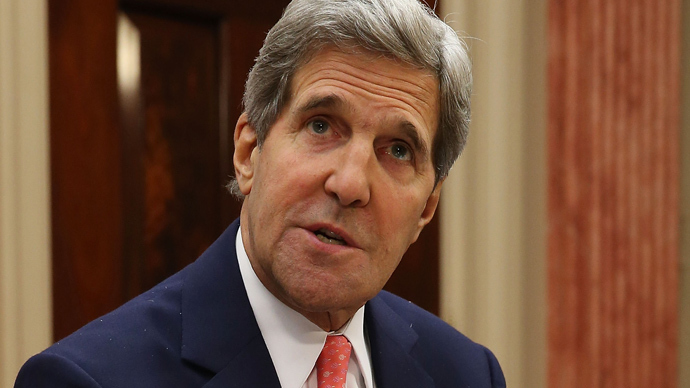
It is impossible to imagine the diplomatic solution that emerged last weekend if the principles of JWT had not been invoked by so many parties.

It is too soon to know how all this will play out in Syria, but for the longer run at least three things seem clear: (1) none of this promises to end the civil war raging in Syria; that crisis remains untouched; (2) the case against chemical weapons is now stronger than ever (Syria now admits having them and agrees to give them up and sign the international convention prohibiting them); (3) the basic terms of the Catholic Just War Theory are becoming the common currency of public discourse on war.

The just war theory is no longer the Church’s intellectual property, of course.  No one ever copyrighted it.  But on the day JWT actually prevents a war (and Syria might provide that day), the Catholic Church will have made a profound historical contribution to the cause of world peace—whether anyone notices and not!

  © Bernard   F. Swain PhD 2013

Friday, August 30, 2013

#400: Who’s YOUR Wisdom Figure?

The 50th anniversary of the 1963 March on Washington triggered a remarkable array of commentaries from all angles.
Many naturally focused on Martin Luther King’s “I Have a Dream” speech, some specifically singling out his vision of an America where character counts more than color.


Some argued that we should also remember that other leaders, like A. Philip Randolph, were also major figures in that event. Some sought to remind us that the event’s prime focus was not only racial equality but rather “jobs and freedom.” Some commented that the March’s call for greater rights and opportunity has relevance today, beyond the African-American community, for immigrants, gays, undocumented workers, and those suffering from our current economic malaise. Some, finally, reminded us that King’s vision later widened beyond civil rights to embrace non-violence in all its forms—including his controversial opposition to the war in Vietnam and his call for a non-violent spiritual revolution.
But amid this array of remembrance and interpretation one thing seems clear. The March on Washington, not just for those attending or viewing on TV, but for those who learned about it later, established Martin Luther King as one of the great—if not the greatest—wisdom figures in American life.
He is not alone:  Americans find wisdom in Thomas Jefferson, Abraham Lincoln, Susan B. Anthony, and others. But for at least 45 years (since his April 1968 assassination) King has stood out. He is now the only American honored with his own national holiday. His letters and speeches are treasured by millions and studied in schools across the land. His face is as well-known as any American in history, and his memorial on the National Mall is a rare honor for a non-president. His “I Have a Dream” speech—much of it improvised in a moment of inspiration—is often regarded as the greatest American speech of the 20th century.
King’s iconic status means that people admire him even if they know little about him. It means they are inspired by what they do know of his vision and values. It means they conform their vision of America—and of life—to his. It means that King’s opinions and convictions are largely beyond scrutiny and criticism for millions. In a secular society not given to devotion, he is venerated as former ages venerated saints.
In this he shares a rare popular status accorded very few individuals in the modern world. In Western culture, such iconic status is reserved for those who wield wisdom rather than power. Heads of state, generals, and corporate giants do not acquire such status. It goes instead to people like Gandhi, Mother Teresa, Albert Schweitzer, Dorothy Day, Oscar Romero, and Martin Luther King.
For me this raises a point of personal curiosity. As we observe the March’s 50th anniversary, I wonder: Who are the wisdom figures in each of our lives?
I ask this question for myself and my own generation, but especially for my children’s generation. And I ask for two reasons.
First, because any life without wisdom cannot be fully lived. The mystery of life is too complex and rich to savor without some insight into its true meaning and value. And few humans possess the personal tools to plumb that mystery alone, without the help of others. The “examined life” is not a solo performance. We need wisdom figures just to appreciate our own lives. So we turn to those who inspire us with insights that surpass our own.
Second, I ask because our times demand wisdom more than ever. Vatican Council II (1962-1965) absolutely nailed our current challenge when it observed that the human race had never acquired so much new power so fast as it had in the 20th century. And it reminded us that such vast growth in power requires a parallel growth in wisdom. For only wisdom can harness power and steer it toward good; without wisdom, growing power risks growing dangers.  In the 50 years since Vatican II, the specters of nuclear war, climate change, international terrorism, ecological and economic disaster, genocide, bioengineering and technology run amok have all confirmed Vatican II’s view that our future depends on matching our expanding powers with expanded wisdom.
But where do we find such wisdom? Who offers it?
Of course, wisdom may be sought in literature, philosophy, and art as well as in our religious traditions. But most people find it embodied in exceptional individuals who point us to those other sources. The March’s anniversary reminds us that, for millions of Americans, that individual is Martin Luther King. And that is a good thing.
But I wonder still about many born since King died, raised in a world saturated with comfort and convenience yet consumed with anxiety about the future of their lives, their nation, and their world. Who offers them the wisdom they need?
Sometimes we read of the next generation’s search for heroes—but heroism is about achievement and character, while wisdom is about insight and vision. Athletes can be role models and heroes, but make unlikely wisdom figures.  Celebrities are known for their fame but not for their insight.  People in public office may be admired for their abilities and occasionally even for their courage, but politics is seldom seen as wisdom’s natural home. Corporate giants may be shrewd and powerful and even ruthless, but few of us believe that the bottom line reveals much about the fullness of life.
So if young Americans need wisdom figures—and they do—but cannot find them in sports, show business, politics, or the corporate world—where can they find them? (All evidence suggests, of course, that they will not even LOOK within religious institutions).
I think back to my own formative years, and think of the people who inspired me with their wise insights into life’s purpose and value.  When the pop song “Alfie” asked “What’s it all about?” I turned to the obvious figure from my own family religious tradition: Jesus. And as I came of age I found other figures to follow. Often these were people themselves inspired by Jesus, or else were following visions that complemented what I knew of Jesus’ wisdom.
Over time I was lucky enough to find many wisdom figures to inspire and guide me.
There was John XXIII, the pope who proved that our ancient faith and the contemporary world need not be estranged. There was Pete Seeger, the troubadour who made his music a voice for justice. There was Guy Leger, a Dominican priest who taught me that all true beauty, just like all goodness, is sacred.   
There was Dag Hammarskjold, UN leader who linked the
Dag Hammarskjold
spiritual life and public policy.
There was Albert Schweitzer, who showed how crucial but how also how challenging it is to practice “reverence for life.” There was Gandhi, who proved that non-violent love could conquer hate. There was Bob Lindsay, a Jesuit priest who taught me to find reality beyond appearances.
There was Dorothy Day, who reminded us of the non-violent love at the core of Christian faith. There was King himself, who linked Gandhian non-violence with the gospel-fired flame of racial justice. 
Some of those people I was blessed to know. The others I was blessed to know about. I am still eager to find new wisdom figures: since finishing two recent biographies of Francis of Assisi, I suspect I may soon add his name to my list. All told, it is a good list: robust enough to fuel much reflection on my life and living.
But the main thing is to HAVE such a list, to know the answer to the question: “Who is on MY list? Who are MY wisdom figures?”
That question is also important to those you love: where do they seek and find the wisdom that enriches their lives and nurtures their spirit?
Celebrating the 50th anniversary of the March on Washington, countless observers spoke of  "progress” to measure that event’s legacy. How they assess our “progress” seems to depend on their interpretation of that event’s meaning. So they measure racial justice, or the range of freedom, or economic opportunity, or social equality, or even the strength of our hope or the scope of our national vision.
But for those who now see wisdom in the figure of Martin Luther King, perhaps “progress” is more personal, and must be measured more by the vitality of our spirits than by the prosperity of our land, more by the peace in our hearts than by the turmoil in our world. For King never spoke without preaching, and behind all his preaching was the gospel of peace.
  Bernard F. Swain PhD 2010

Thanks to those who sent donations by Paypal or emailed to send a check. Your help encourages me to keep this up. It's not too late to participate in my annual blog fundraiser! (see #399, the next blog entry below)

Saturday, August 24, 2013

# 399 A Special Message To My Readers

One year ago this month I made two changes to CrossCurrents.


First, I decided to stop emailing complete articles to subscribers, and to replace my online excerpts with a full-service blog that publishes my CrossCurrents pieces in their entirety.  This has allowed me, among other things, to use photos and graphics.


Second, I dropped subscription fees for organizations (mostly parishes) as well as individuals.  Now anyone can view CrossCurrents free and anyone can enter their email address to receive free notices for each new article.


After one year, I believe that CrossCurrents is better than ever, and its readership continues to grow.  Beginning last August, every subsequent month has had more readers than any month before August (when the online CrossCurrents was still only excerpts).  And since April, with my articles on the marathon bombings, readership has jumped again.


Now I have a special request.  CrossCurrents takes up about one day of my time each week, and I need some income to justify that time.  Without subscription fees, I now depend entirely on donations from my readers—which means you!


So you may consider this my FIRST ANNUAL FUNDRAISER!


You’ll find a donation button on the right, which allows online payments through Paypal.  Or, if you prefer to donate by check, just e-mail me at bfswain@juno.com and I will supply a mailing to address for your check.


I hope you continue to benefit from my writing on current issues in light of faith, and I am very grateful for your support.  That support will enable me to continue CrossCurrents into the coming seasons.


Thank you, and all good blessings!


Bernie swain

Friday, August 2, 2013

#398: The Pope’s New Role: Troublemaker

Pope Francis put his style AND his substance on display in Rio to stunning effect...
By the end of World Youth Day in Rio, everyone--bishops, priests, politicians, journalists, even the youth themselves--were left a bit breathless trying to keep up with this elderly but ever-youthful “phenom” called Pope Francis.

Not only did he wade on foot into Rio’s most dangerous slum, not only did he draw more than 3 million to Copacabana Beach, not only did he initiate an unprecedented 80-minute no-holds-barred press conference on the plane home--but he used the Rio trip as the occasion to begin spelling out his agenda on the major issues facing our Church and our world. 

And that spelling out spelled “trouble” for a wide variety of audiences.

Rather than offering lengthy complex analyses of a few issues, Francis made brief comments on many current concerns.  In that spirit, let me suggest just how much trouble he is stirring up.

Clericalism:  When Francis says this: I want to tell you something. What is it that I expect as a consequence of World Youth Day? I want a mess. We knew that in Rio there would be great disorder, but I want trouble in the dioceses!...I want to see the church get closer to the people. I want to get rid of clericalism, the mundane, this closing ourselves off within ourselves, in our parishes, schools or structures. Because these need to get out!

That spells trouble for any churchmen who strive for status, who cling to privilege or power, who exploit their authority for themselves, OR who expect laypeople to be docile and compliant like obedient little children.

Culture Wars:  When asked why he had little to say about abortion and same-sex marriage, Francis said that the Church’s official positions are well established, and besides he wanted to keep a positive focus during World Youth Day.  

 This spells trouble for anyone who thinks the Church is only strong when it is fighting the culture wars or obsessing over sexual matters like contraception.

Gay Priests:  Asked about gay priests in the Vatican, Francis quipped:
"I have still not seen anyone in the Vatican with an identity card saying they are gay"--and then went on to say:

So much is written about the gay lobby…They say there are gay people here.  I think that when we encounter a gay person, we must make the distinction between the fact of a person being gay and the fact of a lobby, because lobbies are not good.

This spells trouble for all who thought Benedict XVI’s policy against ordaining gay men (which led to purges of some seminaries and seminaries faculties) was an absolute, eternal edict.  It now appears that the Church’s many gay priests can breathe a little easier.

Gays: And Francis also made these remarks about gay people in general:

If someone is gay and he searches for the Lord and has goodwill, who am I to judge? The catechism of the Catholic Church explains this very well. It says they should not be marginalized because of this [orientation] but that they must be integrated into society.  The problem is not that one has this tendency; no, we must be brothers.

This spells trouble for pastors and bishops who want to boycott the Boy Scouts of America just to keep out gay members—as well as many other Catholics who discriminate against gays.

An Introverted Church: At Rio’s cathedral, Francis urged the gathered bishops and clerics that they must not:

Keep ourselves shut up in parishes, in our communities, when so many people are waiting for the gospel…I want the church to go out in the street.  The seminaries, the institutions must go out in the street.

This spells trouble for all church officials content with “business as usual” even as our numbers decline.

Youth: When Francis focused on youth, he said this:

A young man who doesn’t protest doesn’t suit me…A young man is essentially a nonconformist, and that is a very beautiful thing. You need to listen to young people, giving them outlets to express themselves and ensure they don’t get manipulated.

This spells trouble for parents who pressure their kids to conform, to simply accept things as they are and fit in--and spells trouble too for youth who are content to simply follow the path laid out for them.  Francis, who came of age in the 1960s, seems here to echo that decade’s call to question both established ways and the authorities that defend them.

And when he called on youth to be “actors of change,” he challenged a whole generation to make a difference in the world:

Keep overcoming apathy and offering a Christian response to the social and political concerns taking place in different parts of the world.

Materialism: This went along with his warning not to idolize the seductive comforts of modern life:

It is true that nowadays, to some extent, everyone, including our young people, feels attracted by the many idols which take the place of God and appear to offer hope: money, success, power, pleasure…Often a growing sense of loneliness and emptiness in the hearts of many people leads them to seek satisfaction in these ephemeral idols.

This spells trouble for young people conditioned to believe that materialism holds the key to the good life.  It invites them to realize that life is fullest when understood as a spiritual journey.

Inequality, Injustice, and Peace: No doubt the destitution of Rio’s favelas reminded Francis of its own poor neighborhood in Buenos Aires, so it’s no surprise he made his typical concern for the poor a main theme in Rio.  But he made it clear that his concern went beyond charity to justice, and beyond poverty to its causes:

The measure of the greatness of a society is found in the way it treats those most in need…those who have nothing apart from their poverty!

I would also like to tell you that the Church, the “advocate of justice and defender of the poor in the face of intolerable social and economic inequalities which cry to heaven” (Aparecida Document, 395), wishes to offer her support for every initiative that can signify genuine development for every person and for the whole person.

No-one can remain insensitive to the inequalities that persist in the world."

This led him to appeal to the world’s rich:

"I would like to make an appeal to those in possession of greater resources, to public authorities and to all people of good will who are working for social justice: Never tire of working for a more just world, marked by greater solidarity.

And it also led him to dismiss the naive notion that we can pursue peace at home and abroad without attacking inequality:

No amount of pacification will be able to last, nor will harmony and happiness be attained in a society that ignores, pushes to the margins or excludes a part of itself.

All this spells trouble for those American Catholics--and Americans generally--who fail to see that our way of life has produced the worst inequality of any rich nation, has also perpetuated inequalities between the rich and poor nations, and has impeded peace while providing fertile soil for terror.

The Church’s Methods: When Francis offers this criticism of the way the church communications with its members and the world at large:

At times we lose people because they don't understand what we are saying, because we have forgotten the language of simplicity and import an intellectualism foreign to our people," he said. "Without the grammar of simplicity, the church loses the very conditions which make it possible to fish for God in the deep waters of his mystery.

Perhaps the church appeared too weak, perhaps too distant from their needs, perhaps too poor to respond to their concerns, perhaps too cold, perhaps too caught up with itself, perhaps a prisoner of its own rigid formulas," he said. "Perhaps the world seems to have made the church a relic of the past, unfit for new questions. Perhaps the church could speak to people in their infancy but not to those come of age.

This spells trouble for all those who fail to see that, even when Catholic truths are convincing, their communication may not be persuasive.  

This repeats, of course, John XXIII’s distinction between that truths of Catholic faith and the way those truths are expressed--which was his argument for the “updating” that he expected from Vatican II.

The Value of Mercy: When Francis speaks of mercy:

We need a church capable of rediscovering the maternal womb of mercy…Without mercy, we have little chance nowadays of becoming part of a world of “wounded” persons in need of understanding, forgiveness and love.

He echoes John XXIII’s opening address at Vatican II, more than 50 years ago.

That spells trouble for all those who are convinced that a stricter, calmer, sterner church leadership will produce a smaller, purer, better Church. Francis clearly prefers a bigger, messier, more “catholic” and less puritanical Church.


By now you may realize that, when I say “trouble,” I do not mean a negative consequence--any more than Francis did when telling youths to cause trouble in their dioceses.  By “trouble,” Francis and I mean simply to challenge the accepted ways and establish paths that keep many of us from promoting the “civilization of love” that is the Church’s mission in the world.  This challenge applies to so many--to bishops, priests, church officials, parents and youth, political and business leaders, teachers, parents, and the youth themselves.

The more I hear this man, the more convinced I become that we must understand him as the first truly “post-Vatican II” pope.  By that I mean that he is the first pope since Vatican II who was not a participant at Vatican II.

His five predecessors experienced firsthand the ambivalence in tension that built toward the Council’s end --a tension that weakened some support for the Council’s final document:  The Church in The Modern World.  Neither John-Paul II nor Benedict XVI were entirely happy with that document, for they did not share its optimistic tone about the outside world.

But Francis was a seminarian--still a layperson--during the Council.  And his experience of it was like millions of other Catholics: secondhand, by media coverage and word of mouth.  Instead of witnessing the infighting and negotiations among the council fathers, he witnessed the euphoria that greeted the council’s work--and he witnessed too the love and gratitude for John XXIII’s courageous decision to call the Council.

I believe we are now witnessing the “troubling” openness and simplicity of a man formed, not by the Council itself, but by its impact on the rest of the Church.  Like many of us, he seems to feel that its great legacy has been neglected and compromised--and he seems determined to restore its place as the central event in Catholic life even in the 21st century.  So more and more his papacy feels like an extension of John’s, for he seems committed to making John’s vision real--no matter how much “trouble” that causes.
  © Bernard   F. Swain PhD 2013